
(8-11-26) Massachusetts has eliminated the cutoff for when a woman can get an abortion, making it the tenth state, along with Washington, D.C., to allow the procedure at any point in pregnancy.
Gov. Maura Healey, a Democrat, said Monday at a bill-signing ceremony —
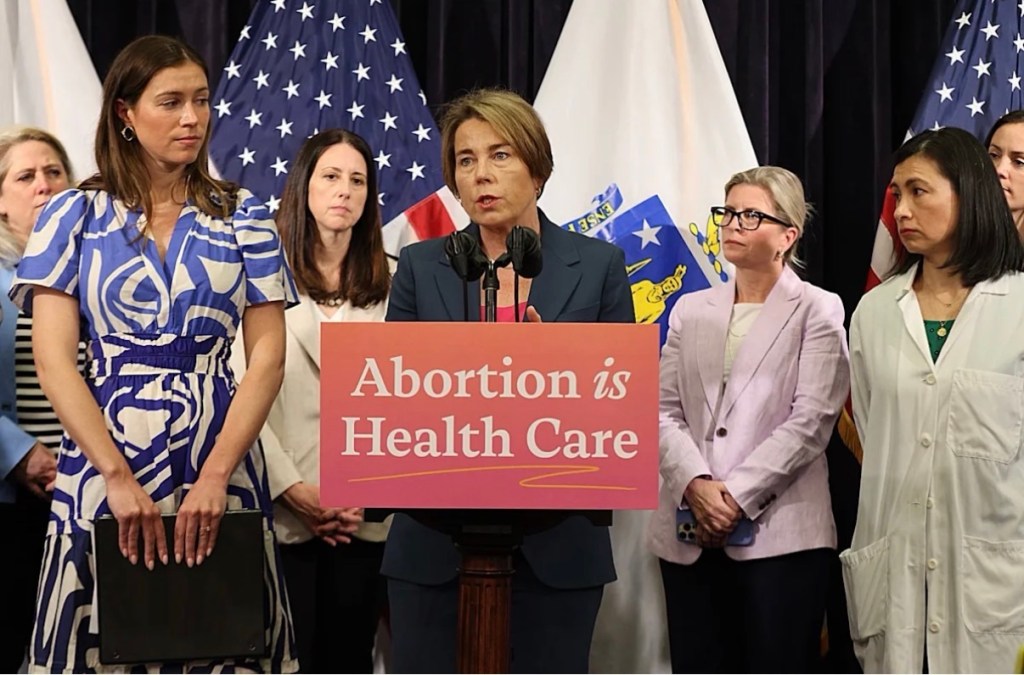
“We believe that health care decisions should be made between women and families and their doctors, not politicians. Abortion will remain safe, it will remain legal and it will remain accessible here in Massachusetts. That’s my commitment to you.
We’ve heard so many stories, stories that are filled with a lot of pain and anguish and heartache … We’re signing this law so that new patients, people we won’t know or won’t meet, will be able to get the care that they need in Massachusetts.
“That’s what we’re up against in this moment. It is up to the states to lead. And as governor, I promise that no matter what Donald Trump or Republicans in Congress or the Supreme Court does … we’re going to make sure that women in particular are able to make their own health care decisions — not the government.”
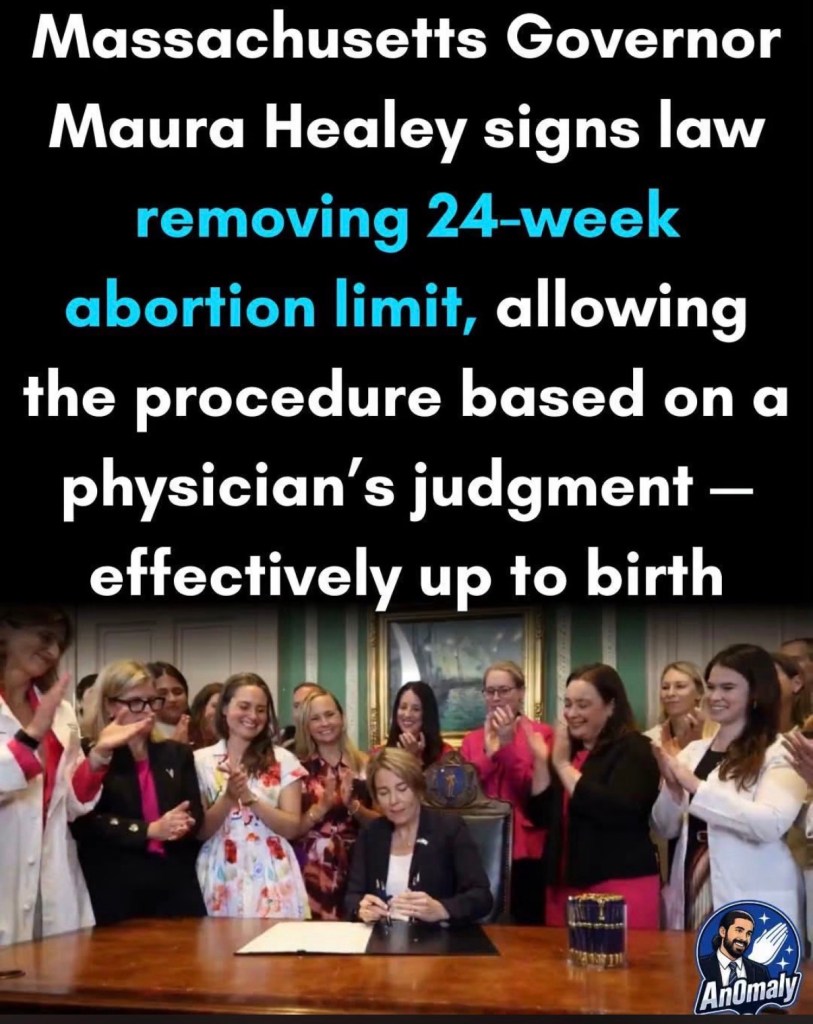
Massachusetts recently enacted a law that removes restrictions on abortions after 24 weeks, allowing healthcare providers to make decisions based on medical judgment rather than specific legal conditions.
Key Details of the New Law
This law marks a significant change in abortion access in Massachusetts.
- Removal of Restrictions — The law eliminates the previous ban on abortions after 24 weeks, making Massachusetts one of ten states without a gestational limit.
- Physician Autonomy — Decisions regarding late-term abortions are now left to healthcare providers, enhancing medical autonomy.
- Focus on Patient Care — The legislation aims to ensure that patients facing serious pregnancy complications receive appropriate medical care.
- Broader Context — This change aligns Massachusetts with other states that have also removed gestational limits, emphasizing reproductive rights.
ACLU of Massachusetts Statement on Gov. Healey Signing Abortion Access Legislation
Gov. Healey today signed the Prioritizing Patient Access to Care Act, a new law that eliminates barriers to abortion later in pregnancy, helping patients get the care they need in Massachusetts instead of forcing them to travel out of state.
Carol Rose, executive director at the ACLU of Massachusetts, released the following statement in response:
“Abortion care is health care, and thanks to this new law, pregnant patients in Massachusetts will no longer have to travel far from their home state to access the care they need. At a time when reproductive freedom is under relentless attack across the nation, this new law ensures that our commonwealth remains at the forefront of the movement to protect and expand civil liberties in the United States. We thank Gov. Healey and House and Senate leadership for their swift action, we thank Reproductive Equity Now and other fellow advocates, and we applaud the courageous people who came forward to tell their stories and convey the urgency of guaranteeing abortion access right here in Massachusetts.”
From the Charlotte Lozier Institute—-
Graphic content included
Are Abortion Survivors a Myth Made Up by Pro-Life Politicians?
Frequently, the unborn baby is killed at the start of a late-term abortion procedure, primarily through the administration of a lethal injection into the amniotic sac or baby’s head or heart or severing the umbilical cord so that the unborn child will bleed to death. However, 69% of late-term abortionists report that they do not induce fetal demise before beginning the abortion, and not all methods are equally effective.[16]
The survival of a baby intended for abortion creates a host of potential legal and medical problems for the abortion practitioner. A watershed article that appeared in the Philadelphia Inquirer in 1981 referred to the survival of a baby after abortion as the “dreaded complication.”[17] The Inquirer article quoted Dr. Willard Cates, then-director of abortion surveillance at the CDC, as estimating “that 400 to 500 abortion live births” occurred every year in the United States. These numbers “are little known,” the article stated, “because organized medicine, from fear of public clamor and legal action, treats them more as an embarrassment to be hushed up than a problem to be solved.” The numbers were also likely low. Cates added, “It’s like turning yourself in to the IRS for an audit. What is there to gain? The tendency is not to report because there are only negative incentives.”
In the years since Dr. Cates’ admission, more recent testimony to the accidental birth of babies during abortions has come to light, acknowledged by abortion providers, alluded to by abortion advocates, reported by a handful of states, and sometimes shared by the survivors themselves.

