(8-6-25) This week at the Fasig-Tipton Yearling sale an Into-Mischief colt brought a $4.1 price tag.
So how much of a gamble is it to pay that much for an ‘untested’ yearling. Below are several items of interest when deciding what to pay for a purchase.
If a thoroughbred were to earn $4 million in race purses within a single year, let’s look at how that might realistically be achieved at the top level of global racing.
Generated by ChartGPT AI
🏇 The richest races in the world (winner’s share)
Race-Winner’s Purse
- Saudi Cup (Riyadh)-$10 million
- Dubai World Cup (Dubai)-$7 million out of $12 million total purse
- Breeders’ Cup Classic (USA)-$6 million purse; winner gets most ($3–3.2M+ depending on structure)
- Kentucky Derby (USA)-$5 million purse; winner takes home $3.1 million
- Pegasus World Cup (USA)-$3 million purse ($1.8–2.5M for winner depending on fees/incentives)
- Australia’s Melbourne Cup~$8.4 million purse; winner gets $4.4 million
🚀 How to reach ~$4 million in one calendar year
You’d need to win combinations of the biggest races:
Option A: Single blockbuster win
Win the Dubai World Cup ($7M purse → ~$7M winner share), which alone surpasses $4M. Or win the Saudi Cup ($10M purse → ~$10M for the winner) and you’re well past the goal.
Option B: Two or three major wins (or near equivalent)
Win the Breeders’ Cup Classic (~$6M purse → around $3M to winner). Plus and win the Kentucky Derby (~$5M purse → $3.1M). Two wins like this (if eligible) exceed $4M by a wide margin. Or: a win in the Kentucky Derby + winning Pegasus World Cup (~$1–2 M) = over $4 M. Alternatively: a single Melbourne Cup win gives $4.4M, so that one leg alone would clear the $4M threshold.
⚠️ Practical considerations
Many of these races are restricted by age (e.g. Kentucky Derby and Breeders’ Cup Classic for 3‑year‑olds) or region (Australian races for southern‑hemisphere horses, etc.). Scheduling matters: Saudi Cup is late February, Dubai World Cup in early April, Kentucky Derby in May, and Breeders’ Cup in November—spacing allows potential participation. Travel and eligibility: Some horses may not be qualified for both U.S. and international races in the same year, depending on breeding, trainer, and campaign plan.
🧭 Example campaign to hit $4M:
Win the Breeders’ Cup Classic (~$6M purse → ~$3M winner). Then, win a mid-tier Grade 1 like the Pegasus World Cup (~$3M purse → ~$1–1.5M winner). That combination yields over $4 million in earnings in one calendar year.
Or simply:
Win the Melbourne Cup (~$4.4M winner). Or win the Dubai World Cup (~$7M → $7M winner), far exceeding the target from a single race.
Summary:
To make $4 million in purses in a year, a thoroughbred would typically need to win at least one top-tier international race (e.g. Breeders’ Cup, Dubai World Cup, Saudi Cup, or Melbourne Cup), possibly combined with another major Grade I victory to cross that threshold.
Past high-priced thoroughbreds…who did not produce during racing careers
Thoroughbreds who underperformed or failed outright:
🐎 The Green Monkey
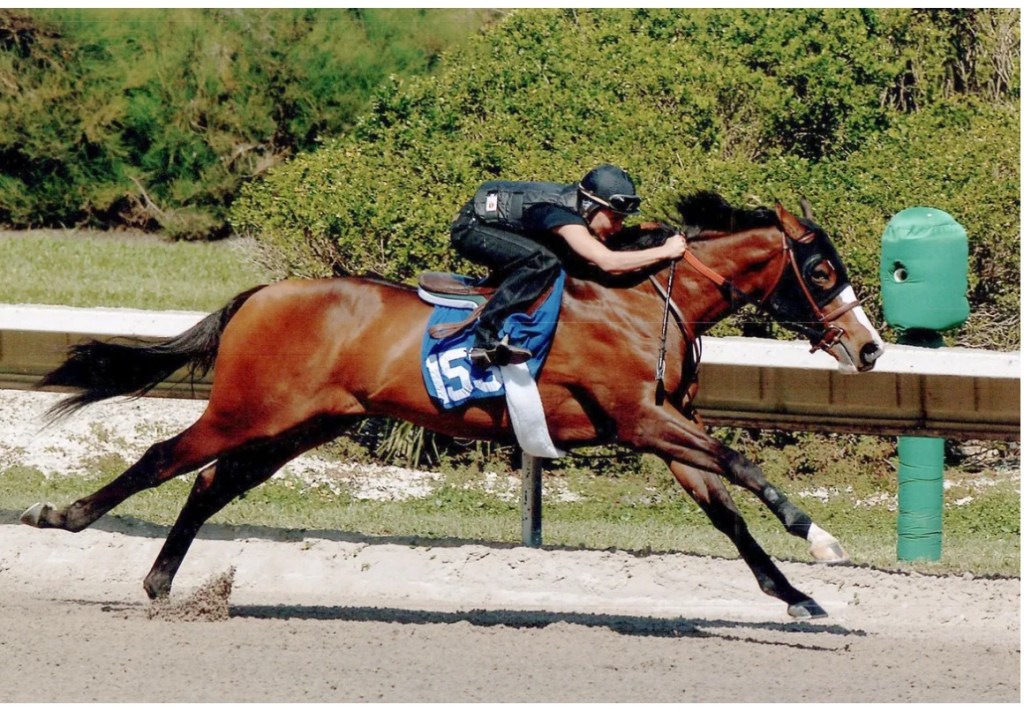
Price: $16 million (2006, Fasig-Tipton 2-year-olds in training sale) Record: 3 starts – 0 wins Earnings: $10,440 Notable facts: Still holds the record for the most expensive Thoroughbred ever sold at auction. Was retired early due to injury and never justified the hype. Despite strong pedigree (sired by Forestry), he flopped on the track and had limited success at stud.
🐎 Snaafi Dancer
Price: $10.2 million (1983, Keeneland July Yearling Sale) Record: Never raced Earnings: $0 Notable facts: Purchased by Sheikh Mohammed’s Darley Stud. Reportedly too slow to race; was retired to stud but proved infertile.
🐎 Seattle Dancer
Price: $13.1 million (1985, Keeneland July Yearling Sale) Record: 5 starts – 2 wins Earnings: ~$150,000 Notable facts: Half-brother to Seattle Slew. Though not a total flop, he never came close to justifying his price. Had some modest success as a sire in Europe.
🐎 Jalil
Price: $9.7 million (2005, Keeneland September Yearling Sale) Record: 11 starts – 4 wins Earnings: ~$327,000 Notable facts: Sired by Storm Cat out of a Seattle Slew mare. Trained by Godolphin, but his only notable win was the Group 2 Maktoum Challenge. Faded quickly after early promise.
🐎 Plavius
Price: $9.2 million (2006, Tattersalls) Record: 18 starts – 2 wins Earnings: ~$40,000 Notable facts: Bought by Sheikh Mohammed. Poor results in both UK and UAE; dropped in class significantly during his career.
Many bargain-priced Thoroughbreds have gone on to defy expectations and win millions on the track, proving that heart, talent, and good training can beat pedigree hype and price tags. Here are some of the most inspiring examples of low-cost horses who became champions:
🐎 Mine That Bird
Price: $9,500 (2007 Fasig-Tipton yearling sale) Career Earnings: $2.2 million Record: 18 starts – 5 wins Notable Wins: 2009 Kentucky Derby (50–1 odds!) Fun Fact: Shipped to the Derby in a trailer driven by his trainer. Overcame muddy conditions and a late surge to shock the field. Legacy: Immortalized in the movie 50 to 1.
🐎 California Chrome
Price: $10,000 (total cost of sire and dam) Career Earnings: $14.75 million Record: 27 starts – 16 wins Notable Wins: Kentucky Derby, Preakness Stakes (2014), Dubai World Cup (2016) Fun Fact: Bred by first-time breeders from a mare bought for $8,000 and a stallion standing for $2,500. Legacy: One of the richest and most beloved racehorses in U.S. history.
🐎 Stymie
Price: Claimed for $1,500 (1943) Career Earnings: $918,485 (equivalent to over $10 million today) Record: 131 starts – 35 wins Notable Wins: Numerous handicap races in the 1940s Fun Fact: Initially a dud, he blossomed under new training and became a fan favorite. Legacy: Inducted into the Hall of Fame.
🐎 Seabiscuit
Price: Sold for $8,000 after an unimpressive early career Career Earnings: $437,730 (huge money in the 1930s) Record: 89 starts – 33 wins Notable Wins: Santa Anita Handicap (1940), multiple stakes wins Fun Fact: Became a symbol of hope during the Great Depression. Legacy: Subject of a bestselling book and Oscar-nominated film.
🐎 Wise Dan
Price: Homebred from a modest pedigree (sire stood for $5,000) Career Earnings: $7.5 million Record: 31 starts – 23 wins Notable Wins: Two-time Horse of the Year (2012, 2013), Breeders’ Cup Mile (2x) Fun Fact: Excelled on turf, dirt, and synthetic surfaces. Legacy: One of the most versatile and dominant geldings in modern racing.
🐎 Da’ Tara
Price: $50,000 (yearling sale) Career Earnings: $743,067 Notable Win: 2008 Belmont Stakes (defeated Big Brown) Fun Fact: Went off at 38–1 odds in the Belmont and pulled one of the biggest upsets in the race’s history.
🐎 Groupie Doll
Price: $5,500 (yearling sale) Career Earnings: $2.6 million Record: 23 starts – 12 wins Notable Wins: Two-time Breeders’ Cup Filly & Mare Sprint winner Legacy: Became a top female sprinter despite her bargain beginnings.
 Stateline Network EXTRA